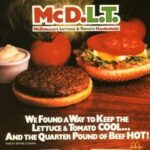
 The 1980s were a golden age of fast-food innovation. Every major chain seemed determined to create the next must-have menu item, introducing everything from new sandwiches and desserts to larger burgers and creative packaging. Among the most memorable—and perhaps most unusual—experiments was the McDLT, a hamburger that promised something customers had never experienced before: a burger that kept the hot ingredients hot and the cold ingredients cold.
Released by McDonald’s in 1984, the McDLT quickly became one of the chain’s biggest marketing campaigns of the decade. Its clever packaging, catchy commercials, and unique dining experience made it one of the most talked-about fast-food items of the 1980s. Although it disappeared from menus years ago, the McDLT remains one of the most nostalgic menu items ever offered by McDonald’s.
A New Idea for a Classic Burger
By the early 1980s, McDonald’s already had an impressive lineup.
Customers could choose from the Big Mac, Quarter Pounder, Cheeseburger, Hamburger, Filet-O-Fish, and several chicken offerings. Competition from Burger King, Wendy’s, and other chains, however, pushed McDonald’s to keep experimenting.
One common complaint about fast-food hamburgers involved temperature.
The meat arrived hot.
The lettuce and tomato often became warm.
The bun sometimes became soggy.
McDonald’s engineers believed they had found a solution.
Rather than assembling the burger completely before serving, why not separate the hot ingredients from the cold ones until the customer was ready to eat?
The McDLT was born.
The Revolutionary Packaging
The McDLT’s packaging became just as famous as the sandwich itself.
Instead of arriving in a traditional cardboard box or paper wrapper, the burger came inside a large two-compartment Styrofoam container.
One side contained:
- Beef patty
- Bottom bun
The other side held:
- Top bun
- Lettuce
- Tomato
- Cheese
- Pickles
Just before eating, customers simply folded the cold side onto the hot side and closed the burger.
The idea seemed surprisingly simple.
The burger stayed hot.
The vegetables stayed crisp.
The experience felt interactive, almost like finishing the sandwich yourself.
“Keep the Hot Side Hot…”
The McDLT’s advertising campaign became legendary.
Commercials repeatedly emphasized the slogan:
“Keep the hot side hot and the cool side cool.”
The catchy jingle quickly became one of McDonald’s most recognizable advertising themes of the decade.
Rather than focusing on the burger’s taste alone, commercials highlighted the contrast between steaming beef and crisp vegetables.
It was less about introducing another hamburger and more about demonstrating an entirely new way to enjoy one.
Jason Alexander Before Seinfeld
One reason many people remember the McDLT commercials is the appearance of a young Jason Alexander.
Years before becoming world-famous as George Costanza on Seinfeld, Alexander appeared in energetic McDLT television commercials singing and dancing about the sandwich’s unique design.
His enthusiastic performances became iconic examples of 1980s advertising.
Looking back today, it’s fun to see a future television superstar enthusiastically promoting a hamburger while dancing across the screen.
The commercials have become nostalgic favorites on retro television compilations.
What Was on the McDLT?
Although the packaging received most of the attention, the sandwich itself was fairly straightforward.
The McDLT featured:
- Quarter-pound beef patty
- American cheese
- Lettuce
- Tomato
- Pickles
- Mustard
- Mayonnaise
- Split sesame seed bun
Unlike the Big Mac, it didn’t include multiple patties or special sauce.
Instead, its appeal centered on freshness.
McDonald’s wanted every bite to taste like it had just been assembled.
A Premium Fast-Food Experience
During the 1980s, fast-food restaurants increasingly competed on quality rather than simply convenience.
Burger King promoted flame-broiled burgers.
Wendy’s emphasized fresh beef.
McDonald’s positioned the McDLT as a premium hamburger that delivered restaurant-style freshness in a fast-food setting.
The innovative packaging suggested that customers were receiving something beyond the ordinary.
For many diners, the experience genuinely felt different.
A Product of Its Time
The McDLT perfectly reflected the optimism of the 1980s.
The decade embraced innovation.
Everything seemed to be getting bigger, better, and more technologically advanced.
If engineers could redesign televisions, automobiles, and personal computers, why couldn’t they reinvent a hamburger?
The McDLT demonstrated that even something as familiar as a cheeseburger could be improved through clever engineering.
Its packaging became almost as important as the food itself.
The Environmental Problem
Unfortunately, the McDLT’s greatest strength also became its greatest weakness.
The large Styrofoam container generated significant waste.
By the late 1980s, environmental awareness had increased dramatically.
Consumers began questioning excessive packaging.
Environmental groups criticized Styrofoam because it occupied considerable landfill space and was difficult to recycle.
As public opinion shifted, the McDLT’s oversized container became increasingly difficult to justify.
The End of the McDLT
McDonald’s gradually phased out the McDLT during the early 1990s.
Although the sandwich itself remained popular with many customers, the packaging no longer fit changing environmental priorities.
The company eventually replaced it with menu items requiring more conventional wrappers and boxes.
While the McDLT disappeared, many of its ideas lived on.
Fresh toppings.
Quarter-pound beef.
Premium presentation.
These concepts continued influencing future McDonald’s sandwiches for years afterward.
Nostalgia for a Forgotten Favorite
Today, the McDLT occupies a unique place in fast-food history.
Unlike menu items that disappeared because customers disliked them, many people genuinely enjoyed the sandwich.
Instead, changing attitudes toward packaging ultimately sealed its fate.
Former customers often remember:
- Folding the sandwich together.
- Crisp lettuce and tomato.
- The oversized Styrofoam container.
- Jason Alexander’s commercials.
- The unforgettable slogan.
Retro food enthusiasts frequently rank the McDLT among the menu items they’d most like to see return.
The Golden Age of McDonald’s
The McDLT arrived during what many consider McDonald’s most creative era.
The 1980s featured numerous memorable promotions and products, including:
- Chicken McNuggets
- McPizza (later)
- McRib returns
- Happy Meal expansions
- Collector glasses
- Character-themed promotions
- Movie tie-ins
Restaurants themselves reflected the colorful spirit of the decade, complete with bright interiors, PlayPlaces, and Ronald McDonald decorations.
For many children growing up during the era, a trip to McDonald’s felt like an event rather than simply grabbing lunch.
Could the McDLT Return?
Every few years, nostalgia sparks conversations about bringing back discontinued fast-food favorites.
The McDLT often appears near the top of those wish lists.
Modern packaging technology could likely recreate the original concept using recyclable or compostable materials instead of Styrofoam.
Whether McDonald’s ever revisits the idea remains uncertain, but the burger’s core concept—keeping fresh ingredients separate until the last moment—still makes sense today.
In many ways, the McDLT was ahead of its time.
A Lasting Legacy
The McDLT may not have remained on McDonald’s menu for decades, but its impact on fast-food history is undeniable. It represented an era when restaurants weren’t afraid to experiment with bold ideas, even if those ideas required entirely new packaging and marketing campaigns.
The burger’s slogan became one of the most recognizable advertising catchphrases of the 1980s, while its distinctive two-piece container remains instantly recognizable to anyone who ordered one. Add in Jason Alexander’s memorable commercials, and it’s easy to see why the McDLT has become such a beloved piece of fast-food nostalgia.
Its disappearance also tells an important story about changing consumer priorities. What began as an innovative solution to keeping burgers fresh ultimately became a lesson in balancing convenience with environmental responsibility. The packaging that made the McDLT unique was also what made it unsustainable in a changing world.
Even so, memories of the sandwich remain remarkably positive. People who enjoyed the McDLT don’t simply remember eating a hamburger—they remember assembling it, hearing the catchy jingle, and experiencing one of the most creative menu items McDonald’s ever introduced.
For many who grew up in the 1980s, the McDLT represents more than just a discontinued burger. It serves as a delicious reminder of a decade when fast-food restaurants constantly pushed the boundaries of creativity, proving that even something as simple as a hamburger could become one of the most memorable products of its time.
This post has already been read 446 times!